After a raid, a seven-hour standoff and the felling of four cottonwoods, activists say they’re staying put. Overnight, agents moved on the last tree-sitter in Mexico.
Propositions 134 and 135 revive a 30-year-old fight in Colorado over whether the rights of a politically vulnerable LGBTQ+ group should be put directly to voters.
It’s 90 Degrees At Night. Where are Phoenix’s Homeless Supposed To Go?
When the libraries close and the cooling centers shut down, there’s nowhere left to hide from the heat. Six Phoenix residents told us how they survive the night on the streets.
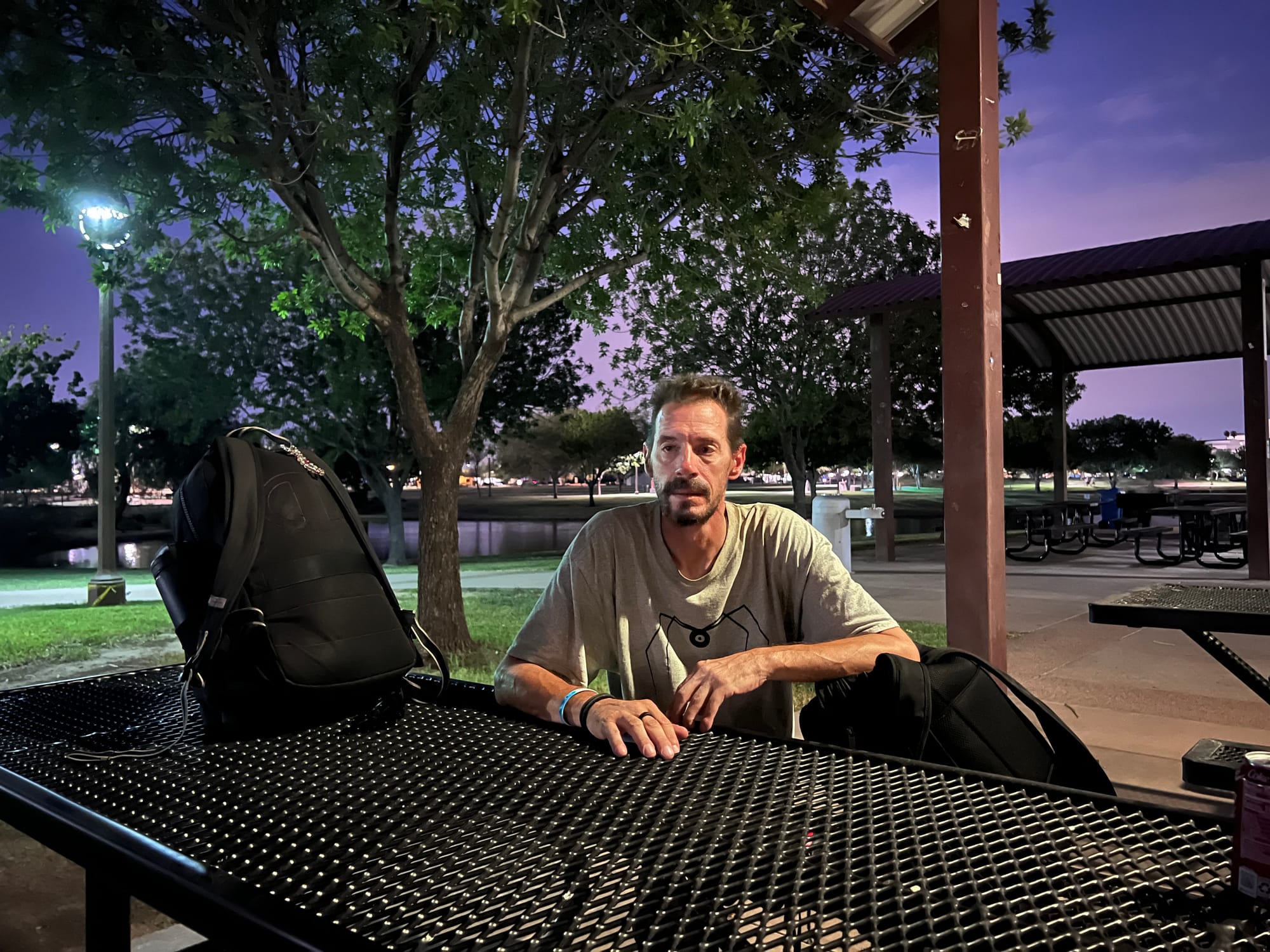
Jim Vaughan roams Phoenix parks at night looking for reprieve from the bake of summer. He snatches brief hours of sleep during the day, otherwise has to tolerate the heat. Photo by John Washington for LOOKOUT.
This story mentions self-harm. Also: LOOKOUT purchased fast food for an interview subject who was hungry. This is not our standard, except in exigent circumstances.
Phoenix’s extreme summer heat will kill anyone. But for people experiencing homelessness here, its brutality is all the more inescapable – and finding refuge is an unending endeavor.
Homeless Phoenicians spend their days searching for cooling centers, libraries, stores, and other places where they can cool down and access resources. But these places typically close by sunset, leaving homeless people to face the full heat of the night while most everyone else takes refuge indoors.
What’s more, recent laws have made people’s ability to obtain respite in public spaces even harder. This year, the City of Phoenix enacted legal penalties for anyone using parks for purposes other than recreation, as well as for those who hand out food or provide medical care to people in parks without a permit.
Over the course of a night, LOOKOUT asked several homeless Phoenicians how they ended up homeless and what they do to survive the city’s oppressive summer heat. Here is what they told us.
Knowing their rights
Born on the Fort Apache Reservation in eastern Arizona, Angela Valencia Casa said that she and her companion, Ernie Hinton Jr., grew up in dysfunction. “Suicide, generational curses and mental trauma is really hard on the rez,” she said, noting that her grandmother was a prisoner of war and showing LOOKOUT the self-harm scars covering her and Hinton Jr.’s arms.
Casa said that when her dad died, she came to Phoenix thinking it would help her find opportunities, but instead she’s alone and on the streets. She said she and Hinton Jr. used to have access to the American Indian Health Plan, but that it recently got cut.
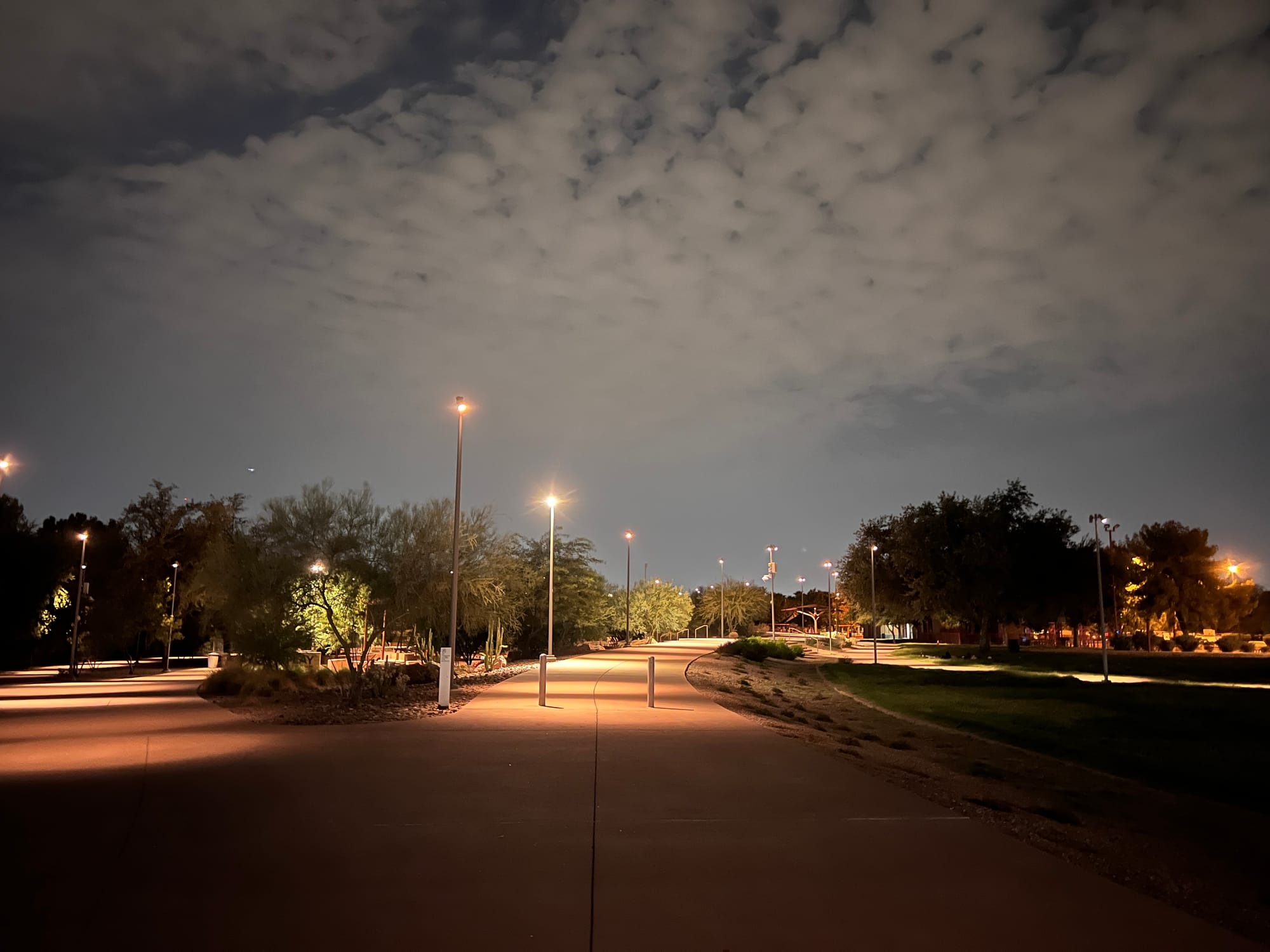
About a dozen people were scattered through Margaret T. Hance Park past 10 P.M. on a summer night near downtown Phoenix. People spread out in the shadows to sleep or chatted near the playground. Temperatures topped 110 degrees that day, and, even long after sunset, it barely felt cooler than that in the park. Photo by John Washington for LOOKOUT
Back when she was first homeless, Casa said it was “OK for homeless, addicts and different nationalities out here.” But in light of police crackdowns on bus stations and public ordinances limiting water and food distribution in parks, she said the situation has gotten worse and that people are always telling them to move.
“This is where I speak for my people,” she said. “I’m prideful, I know my rights, and I’m not going to let someone tell me who I can and cannot be and how to live my life … It’s not right for them to fucking just, you know, say we can’t be here.”
Hinton said that he and Casa go to cooling centers during the day, and they drink beer to withstand the night. “You can’t sleep out here,” they warned, because if you do, “you might not wake up at all.”
Managing the heat
Jim Vaughan spoke candidly about the struggles of staying cool, and staying alive, while being homeless throughout the Phoenix summer. Photo by John Washington for LOOKOUT.
Three years ago, Jim Vaughan said he fell on bad times and that he hasn’t been able to drag himself out yet.
At 56, he spends his nights listening to music at parks, needing to leave by 4:30 a.m. so businesses won’t chase him out. He only sleeps three or four hours a day, he said, usually in parking lots because they’re quiet. He also said that being outside for 12 to 14 hours a day gets you accustomed to the heat.
“Don’t get me wrong, it’s hot as hell,” he said. “But it depends on where you go at night, in this heat. How much you can tolerate and how much you’re willing to tolerate.”
Living on the streets, Vaughan said he has gotten used to not eating well and always sleeping with “one eye open.” Like many homeless people, stores like Circle K and Kwik Trip are his lifesavers, especially when they let people drink water for free. But he said even these stores can sometimes become dicey.
“They’re kind of, I wouldn’t say mean, but they’re always on the lookout for people going in there and stealing stuff,” he said. “I’ll admit, I’ve done it a couple times, just out of sheer desperation. But I try not to.”
Above all else, Vaughan said he doesn’t touch drugs and that he doesn’t interact with people at night. He bides his time waiting for the sun to rise and for a library door to open.
John, who wished to be identified by his first name, spent a year and a half in a refugee camp in the Ivory Coast after being forced from his home during the First Ivorian Civil War, a conflict that wouldresult in the deaths of more than 3,000 people. He received refugee status and came to the United States in 2003.
John said his doctor told him to come to Arizona because, due to his health, he wouldn’t be able to survive cold weather. Even though he initially worked and had a nice apartment when he first moved to the state, John, now 62, said he became homeless “some years ago” and referenced suffering from a past accident.
“When you go down, all the people you help go away,” John said. “You helping people, but when you have an accident or don’t have nothing anymore, they leave you.”
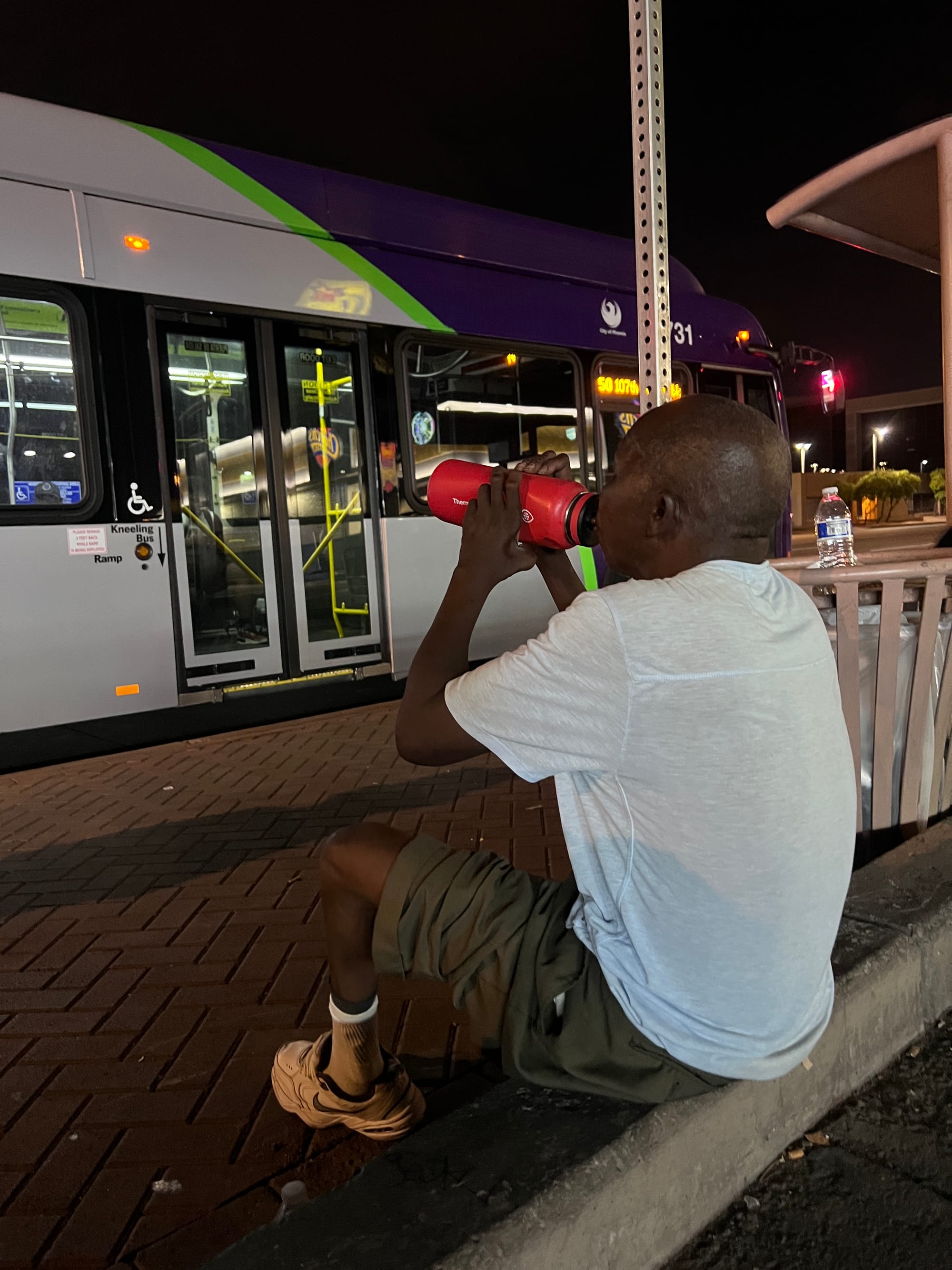
Originally from Liberia, when John first moved to the US as a refugee a doctor told him he needed a warm climate for his health, and so settled in Phoenix. Now homeless, he crashes in friends' apartments and often spends the evenings drinking beer at bus stops. Photo by John Washington for LOOKOUT
Despite facing rejection, John said he’s found new friends who understand his situation and often let him sleep in their apartments. “I’m homeless, but not completely homeless,” he said.
When outside, he spends his time drinking and smoking cigarettes with those friends. As he spoke with LOOKOUT, one came up to him with a fistful of crumpled dollar bills, asking if John would go into the nearby liquor store and buy him a beer. The friend explained that he was barred from the liquor store.
For now, John is just holding out until he becomes eligible to apply for Social Security benefits in December.
Becoming youth targets
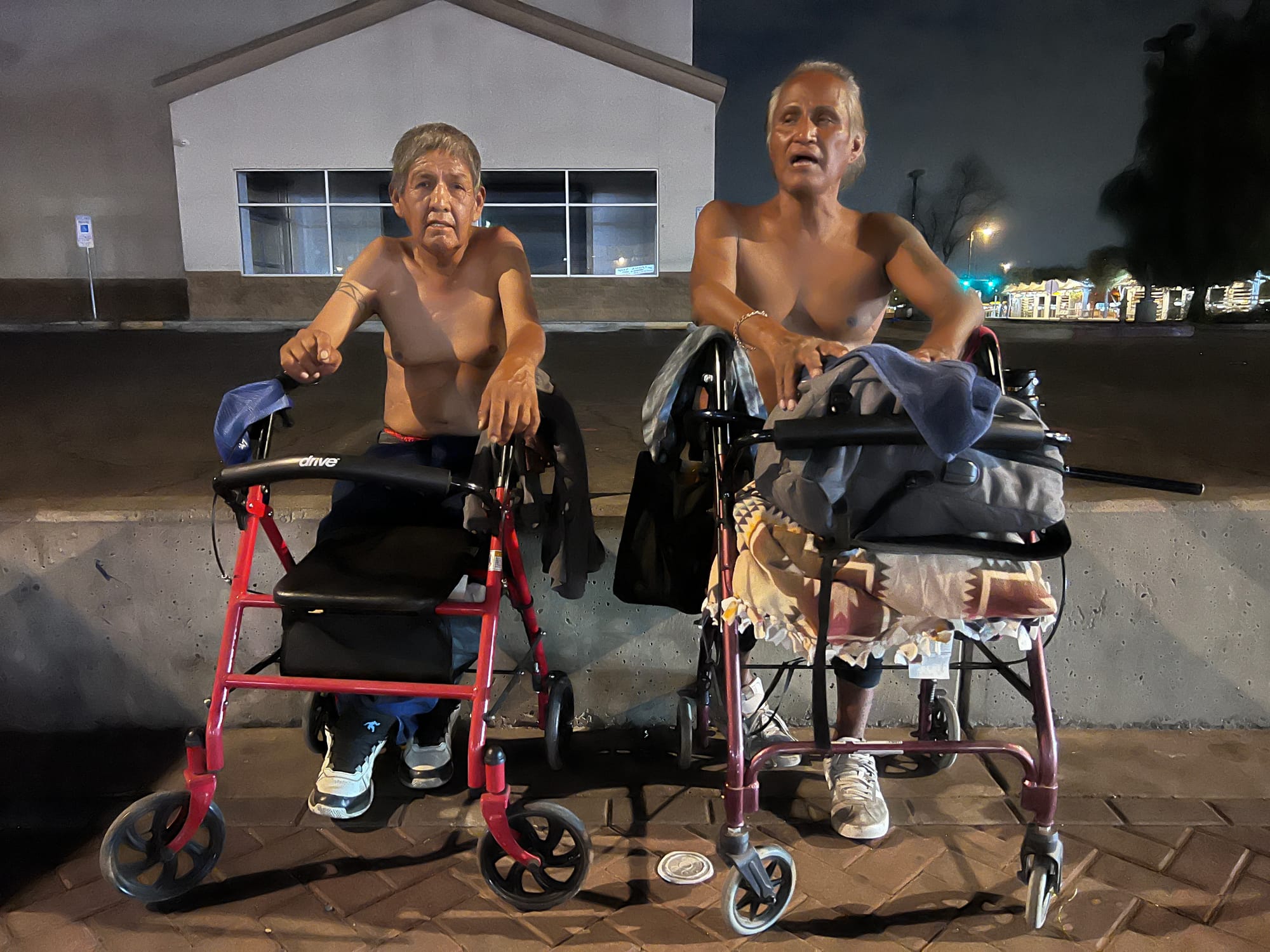
Traze, who had been living with family members in Page, Arizona before he went to prison in Phoenix, has been homeless for a year, since his mother passed away. He and his friend Dwayne — who are both in their 50s — said they don’t like staying in homeless shelters because “there’s always stealing going on, always racism.”
The friends, who were only comfortable sharing their first names, said they are “constantly going in and out from the hospital” to be treated for issues such as dehydration and exhaustion. They also said that nonhomeless people, particularly young people, have targeted them because of their age.
Two close friends, Traze and Dwayne, strip off their shirts and lean on their walkers as they suffer through high evening temperatures. They often join a crew of other homeless people at the corner of Camelback and N 19th Ave. Both in their 50s, they said services for aging homeless people are scarce. Photo by John Washington for LOOKOUT.
“My friend, he got tripped and fell,” Traze said. “Nobody was there to help.” He said Dwayne had his wallet stolen just before speaking to LOOKOUT: “We’re a target to them.”
Dwayne said that he and Travis get water from the light rail station near where they sleep and hop on the buses when they have money to try to stay cool during the night. Travis said he is trying his hardest to get off the streets, but that nobody is able to help.
“I wish they would just help the elderly, get us an apartment or something, but they keep telling us you have to be homeless for at least three to five years,” he said. “And we don’t plan to be homeless that long.”
At LOOKOUT, we believe in the power of
community-supported journalism. You're at the heart of that community, and your support helps us deliver the
news and information the LGBTQ+ community needs to thrive.
After a raid, a seven-hour standoff and the felling of four cottonwoods, activists say they’re staying put. Overnight, agents moved on the last tree-sitter in Mexico.
Propositions 134 and 135 revive a 30-year-old fight in Colorado over whether the rights of a politically vulnerable LGBTQ+ group should be put directly to voters.
LOOKOUT Publications (EIN: 92-3129757) is a federally recognized nonprofit news outlet.
All mailed inquiries can be sent to 221 E. Indianola Ave, Phoenix, AZ 85012.