Historian Bryant Simon writes on a century of bathroom panic, from gay entrapment campaigns to Jim Crow to today’s anti-trans bills, and why he thinks single-user stalls are the fix.
A neighboring property owner to Barracks Bar Phoenix wants a judge to undo the state's approval of its liquor license, putting the future of a community leather space in continued limbo.
The Bathroom Has Always Been Where America Fights About Who Belongs
Historian Bryant Simon writes on a century of bathroom panic, from gay entrapment campaigns to Jim Crow to today’s anti-trans bills, and why he thinks single-user stalls are the fix.
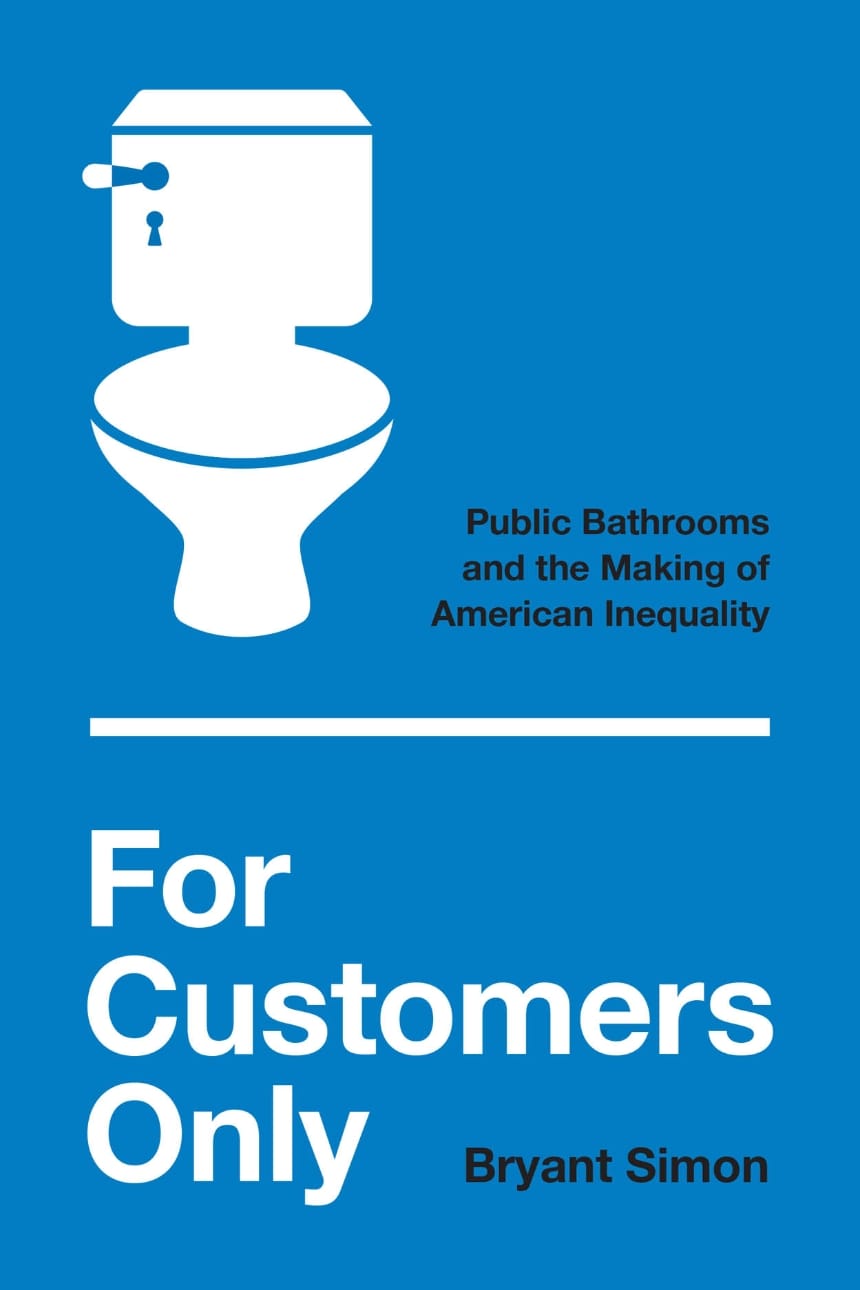
That’s the argument historian Bryant Simon makes in his new book, For Customers Only: Public Bathrooms and the Making of American Inequality (University of Chicago Press). It’s a comprehensive, erudite and sincerely scatological history of the American restroom, and of the fights it has provoked, from the first municipal “comfort stations” of the 19th century to the anti-trans “bathroom bills” of today.
Over a hundred years ago, Simon writes, “the public bathroom became the critical entry point to the freedom and movement of the bustling turn-of-the-century nation.” But officials soon began using these spaces to police who got to move freely: Black Americans, the poor, women, gender-nonconforming people and, above all, gay men. “Sex between men (and male-presenting individuals) set off the first and loudest alarm bells,” Simon writes.
Bryant’s historical plumbing of the issues is timely. On Nov. 3, voters in both Colorado and Arizona will weigh in on anti-trans bathroom and sports measures. LOOKOUT talked with Simon about why bathrooms keep becoming battlegrounds, how “customers only” quietly became a way of deciding who counts as the public, and why the solution could be simpler than the fight suggests.
This conversation has been edited for length and clarity.
LOOKOUT: How did you come to write a book about public bathrooms?
Simon: I didn't have some dramatic, humiliating experience that led me to this. I think we've all had them, but that wasn't it. I was teaching a class and asked my students where they learned about gender. They said what you'd expect: parents, religious leaders, books, friends. Then one really smart student said, "Public bathrooms."
I knew what she meant: the enforcement of two genders, and being asked to make that decision countless times a day. I couldn't get it out of my head, so I did what historians do and went down the rabbit hole.
I found two things quickly. First, there was once a bathroom-building boom, and mayors bragged about how much they spent. That gave me a research question: What happened? Why did we take those down?
"We have these weird boundaries around public bathrooms. You can wash your hands but not your clothes. You can brush your hair but not your teeth. Somehow we all know these rules and generally follow them. Part of that is shame, but it's also about definitions of public and private." — Bryant Simon
Second, nearly every protest movement of the 20th and 21st centuries had a moment at the bathroom door. The fight against entrapment is right there in Carl Wittman's gay manifesto. The first Freedom Rider arrests, before the more dramatic ones in Alabama and Mississippi, were over access to public bathrooms. Then there's the women's movement, unhoused people and, more recently, the trans story. All the civil rights memoirs have a bathroom story. All the coming-out stories have a bathroom story.
If people keep struggling for equality at the bathroom door, I wanted to know what inequalities were created there.
Bryant Simon (left) says that American history's civil rights battles have always included a bathroom moment in his book "For Customers Only." Photo courtesy of Bryant Simon.
LOOKOUT: You write that "No other infrastructure has been as fraught as the public bathroom." Why?
Simon: It's about shame. You might get angry in traffic or when a flight is delayed, but it's not humiliating. You don't feel out of control of your body. The other piece is that people are seeking privacy in public, and those two things can't be reconciled. People want to be unseen there, but you can't be unseen.
On the queer side, sex isn't discovered in the bathroom, but the bathroom brings it into view. People who want sex and don't have privacy see an opportunity. It also brings the unhoused and trans bodies into view. Shame, privacy and being on view make a stew that no other public infrastructure has.
LOOKOUT: How much does homophobia account for public bathroom policy today?
Simon: Historically, in a powerful and unrecognized way. When I started, I thought race would be the turning point: bathrooms would hold together until segregation broke down, and then everything would unravel.
But as early as 1898, New York was noticing men having sex in bathrooms. By 1914 you have the first publicly organized entrapment campaign. My big finding is that managing these spaces through surveillance, arrest and closure was about queer sex. Queerness became the breaking point, and then the template for using these spaces and infrastructures to create other inequalities.
LOOKOUT: What other inequalities grew out of that template?
Simon: The homophobia is fueled partly by heteronormativity, but also by a sense of boundaries, that public and private are separate. Sex is supposed to happen in private, and probably between a man and a woman. Queer sex violates both expectations.
We have these weird boundaries around public bathrooms. You can wash your hands but not your clothes. You can brush your hair but not your teeth. Somehow we all know these rules and generally follow them. Part of that is shame, but it's also about definitions of public and private.
LOOKOUT: Class matters here too. If queer men or trans people had private space, they wouldn't rely on public bathrooms as much, so policing bathrooms also polices the poor.
Simon: Privacy is a commodity. For [R. Fulton] Cutting [an early advocate of public comfort stations in the late 19th century] the bathroom was supposed to make working-class people less working class.
LOOKOUT: Training people how to be in public.
Simon: Yes, the bathroom as classroom.
LOOKOUT: Your title is For Customers Only. How has privatization changed who gets to use public space and meet their bodily needs?
Simon: The turn to the private sector entrenches inequality. Take Starbucks. People say pay toilets have been outlawed, but in a sense we still have them. They're just Starbucks. The private sector feels entitled to exclude, and "for customers only" can become for white people only, for people who appear middle class only.
Look at the 2018 story from Philadelphia. Two Black men were meeting at a downtown Starbucks, and one asked to use the bathroom and was told he had to buy something. I've spent hours in Starbucks and never been asked if I bought anything. When the company got caught racially profiling, or rather that particular worker did, Starbucks said everyone could use the bathroom. It didn't last very long.
Because a truly public bathroom means taking on all the surrounding problems. People need to use the bathroom because they don't have one. People use bathrooms for drugs, because of the drug epidemic, and that concentrates in bathrooms, public or private. It's not that only poor people shoot up, but it's the poor who are policed for their use of bathrooms.
LOOKOUT: The crackdown on cruising is such a key moment here.
Simon: This is a decade long guerilla campaign almost, cat and mouse between sex-seekers and police. It ebbs and flows, but in the ‘50s it was amplified by the fears of the initial Lavender Scare and it runs on those fumes for decades. Big city mayors were continuing to entrap and come down on cruising places. And then you have an inflection point. On one level you have an organized gay rights movement that understands this as police harassment and a threat to freedom. And you have judges recognizing illegitimate [police] tactics, and so you have police unsure they are going to be supported in the courts by the 1970s.
But you also have some really interesting debates when AIDS comes on the scene about how queer men are going to define themselves. Are we going to be defined by where we have sex, how we have sex? Cruising is right at the center of that. It’s a moment not only for people who are privacy challenged.
"Maybe that's when we get to true equality: men waiting in lines." —Bryant Simon, on creating single user stalls
Half of the people cruising don’t identify as queer. There is a kind of pivot where there are much more layered conversations going on, both in the legal and police community and in the gay community about what this means. One of the things I find really interesting in the tail end of that Long Beach story [a police entrapment crackdown that began in 1914] is that some gay men volunteer to police themselves as a “respectability campaign.” By the 1970s, the conversations have evolved, and are much more layered.
LOOKOUT: Arizona and Colorado voters will decide on another anti-trans bathroom and sports measure on Nov. 3. Why are we still in this fight, and where does it end?
Simon: It's a conservative worldview in which boundaries matter. Phyllis Schlafly and others got at this: if one boundary falls, the rest go with it. And this boundary has been reinforced with such vigor. You can't even count the messages about two genders. To call it a cultural construct seems fair, but escaping it seems almost beyond imagining.
But I do think there's an easy technical fix: single-user bathrooms. I wouldn't call them gender-neutral, just single-user. Everyone's equal.
LOOKOUT: Isn't that more expensive?
Simon: Not with new construction. And some buildings can be rehabbed pretty effectively.
LOOKOUT: Personally, I'd miss the shared bathroom. Standing at the urinal next to a stranger, sharing a basic bodily need, is humbling. It reminds you you're in this world with all kinds of folks. And there's the word or two you might exchange at the sinks. Single-user rooms might also mean longer lines.
Simon: Maybe it's not so bad if men wait in some lines. Maybe that's when we get to true equality: men waiting in lines.
The model I like, which I've seen in restaurants but not yet in a public facility, is single-user stalls with a shared sink area. I think it's a really great arrangement.
LOOKOUT Publications (EIN: 92-3129757) is a federally recognized nonprofit news outlet.
All mailed inquiries can be sent to 221 E. Indianola Ave, Phoenix, AZ 85012.