POLITICS
The Man Behind the Anti-Trans Ballot Machine
Tim Mooney has spent years turning contentious political fights into ballot questions. Now, his operation is targeting transgender rights in the southwest.


Survivors of Club Q in Colorado Springs say Tucson’s LGBTQ+ community can draw on lessons from the years of grief, solidarity and division that followed their own tragedy.

On Nov. 19, 2022, Wyatt Kent — a drag queen who performs under the name Potted Plant — was celebrating his 23rd birthday at Club Q, where he was a regular performer. He was doing a drag number that night at the club while his fiancé, Daniel Aston, bartended.
Moments after Kent’s set concluded, a gunman entered the club and shot 24 people, killing five. Aston was shot and killed while behind the bar. And a woman — Kelly Loving — jumped in front of a bullet aimed at Kent and sacrificed her life to save his.
The Club Q shooting — which made national headlines and stuck in the nation’s conversations on race, gender, gun laws and politics for weeks — was almost four years ago.
For Kent, life sometimes feels frozen in time. He performed on New Year’s Eve at a gay club in Connecticut and had to run outside when he heard balloons pop on the ground.
Those memories came back Tuesday morning, when Kent woke up to the news that a gunman murdered two men before killing himself outside Venture-N, a gay bar in Tucson, Arizona, early Monday morning.
“Not a day goes by that I don’t think about what happened (at Club Q),” Kent said. “And I hope these folks in Tucson know how loved and supported they are.”
Finn Schuler was on their way to Club Q to perform as a drag queen when they noticed a flat tire. They pulled into a gas station, opened Facebook while air filled their tire and saw a breaking news alert that a shooter had fired on the bar.
Panicked, Schuler called Hysteria Brooks, a regular performer, who told them she couldn’t talk for long because she was being interviewed by homicide detectives.
“And I just remember thinking, ‘Homicide?’” Schuler said. “Like my brain didn’t register the word.”
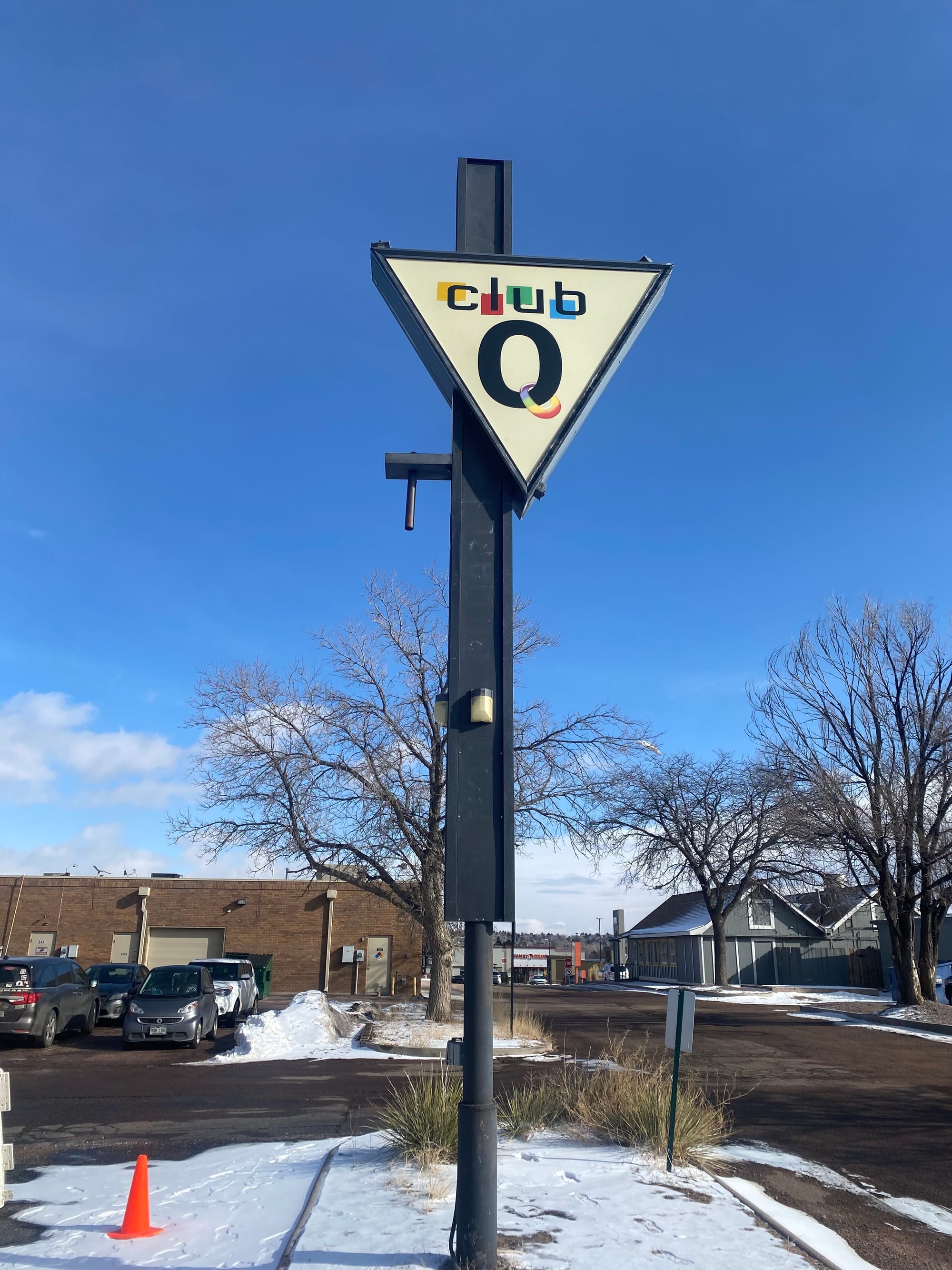
Schuler was up all night calling friends, checking social media accounts and trying to piece together who was confirmed to be alive and who was still missing. (Police in Colorado Springs didn’t reveal the names of the five dead until the next day, and the city’s queer community was checking networks to see who was at Q the night before.)
Schuler began their drag career just more than a year before the shooting at the same venue during newbie night, nervous but excited. The producer that night, Porsha Demarco Douglas, told them they were getting on her stage.
A year later, Schuler found themselves in Demarco Douglas’s arms, crying as the two balanced feelings about how lucky they were not to have been at the club that night with the trauma and depression that comes with knowing their safe space was the target of a hateful, violent act.
The day after the shooting, vigils popped up around the city in churches, downtown streets and outside the club. Schuler remembers seeing friends who they believed could be dead and instead learning — for the first time — that they were alive: “We would scream when we saw each other and then laugh and cry because what do you do when you’re learning someone is alive while you’re still not sure if someone else is?”
For the ensuing months after the shooting, Schuler and Kent felt Colorado Springs was in a frenzy to reinvent itself as a safe queer haven and repent from its public perception of queerphobia.
It wasn’t unfounded: In the late 1980s and early 1990s, dozens of powerful, politically active Christian evangelical organizations set up their headquarters in the city, putting it on the map as a conservative stronghold and deep red alternative to Colorado’s deep blue capital city, just an hour’s drive north.
In the early 2000s, as states around the country debated marriage equality, many of these organizations, such as Focus on the Family, earned national fame for their outspoken opposition to it.
Between the religious headquarters, the presence of the United States Air Force Academy and a military base on opposite sides of the city, Colorado Springs soon became a well-known home for the religious right.
In 1992, a Colorado Springs-based activist group called “Colorado for Family Values” authored Amendment 2, a statewide ballot initiative to overturn local laws that guaranteed protections for LGBTQ+ people from discrimination. Voters supported the amendment with 53% of the vote, earning Colorado the nickname “The Hate State,” before the Supreme Court of the United States ultimately struck the law down four years later.
Kent, who grew up in Colorado Springs, argued that being white and passable for cisgender shielded him from being a target of those who would oppose him for who he is.
“But I became very aware of it after the shooting,” he said, mentioning that he remembers drag shows being hosted in bars that would have never done so before. Rainbow flags were “on every corner.” And church leaders who were vocally anti-LGBTQ+ fell silent.
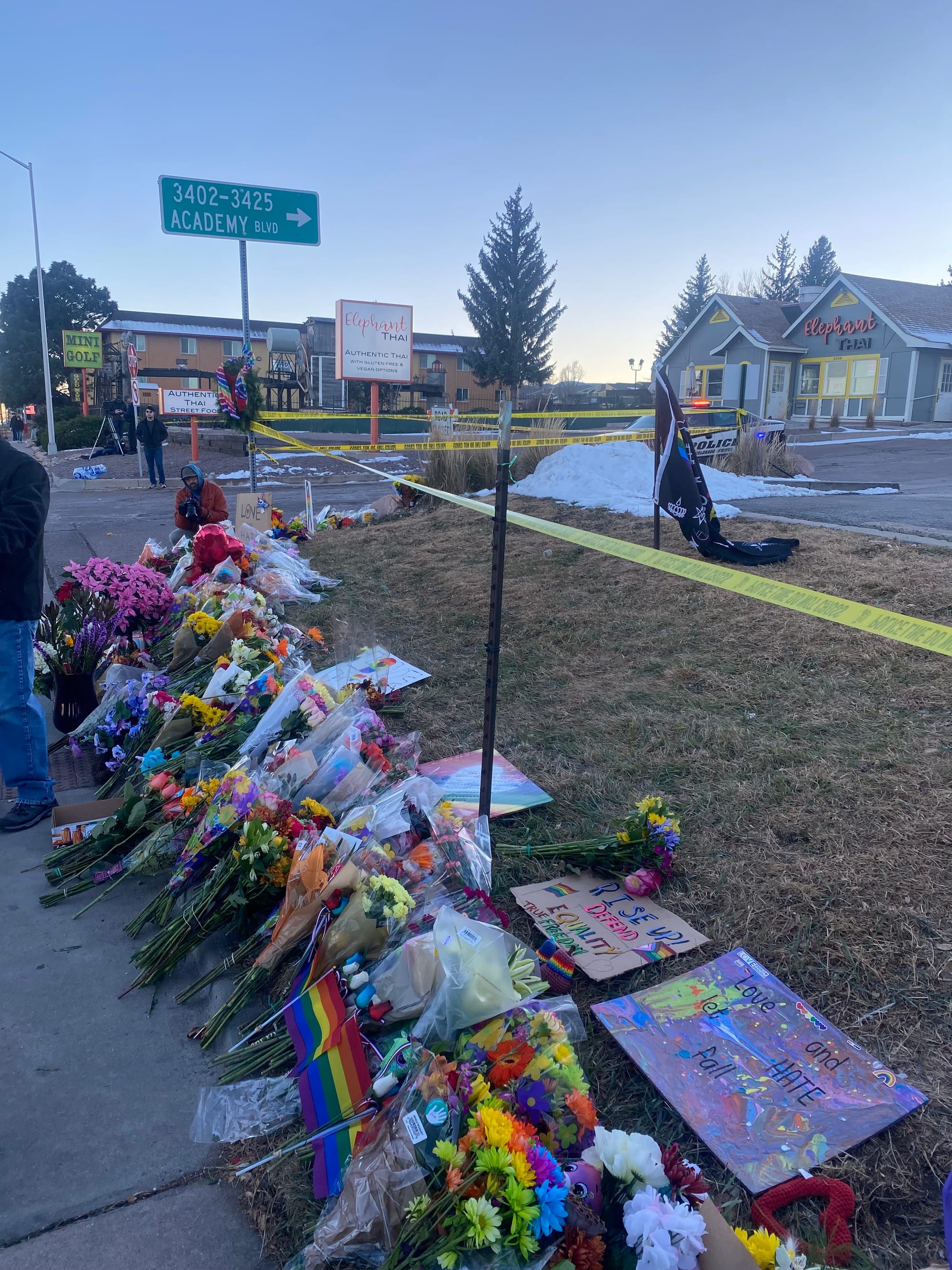
Douglas, the drag performer who gave Schuler their chance at the drag newbie night at Club Q, remembers the moments after in the same way: Rainbow flags popping up all over town, national media staking out in front of survivors’ houses, and social media overflowing with support for queer people in Colorado Springs in the year or so after the shooting.
But fractures within the community have contributed to resentment and divided those who were once united after Club Q.
Club Q owner Matthew Haynes created a GoFundMe to supplement lost wages for club staff and raised $55,000. He constructed a memorial outside the club and opened a new queer space across town, while staff members said they received as little as $981.
And while Demarco Douglas and Kent said they were struggling to find venues that would book them for drag performances, Club Q Director of Operations Michael Anderson — who was at the club the night of the shooting — had dinner with pop star Christina Aguilera. It made some survivors feel slighted that only higher-profile victims were getting attention after the shooting.
“The way that money and opportunities were allocated just felt really wrong,” said Demarco Douglas. “And, unfortunately, that has led to some lasting divides within our community.”
Kent, Demarco Douglas and Schuler all still perform drag as often as they can. Kent now works as an organizer in Colorado Springs and Pueblo, Colorado, for Bread and Roses Legal Center — a social justice-centric legal center that has advocated for survivors since the immediate days after the shooting.
Times were different in 2022, when the shooting took place. The national political climate was still reeling from the public murder of George Floyd and the months of social justice reckoning and protest that came after. President Joe Biden publicly supported LGBTQ+ people throughout his tenure in office, and supporting the community was “the expected thing,” Kent remembered.
But in 2026, those expectations are less clear. President Donald Trump has signed several executive orders targeting transgender individuals, a handful of states have attempted or successfully enacted bans on drag in public, LGBTQ+ people are re-closeting themselves, 27 states have passed laws restricting gender-affirming care for transgender youth, and 29 states have passed laws banning transgender students from participating in sports teams that align with their identities.
For Schuler, Kent and Demarco Douglas, national rhetoric has trickled down and led to sentiments that the community has “largely forgotten” about the shooting.
“The immediate aftermath felt like an overall Band-Aid on the city’s reputation,” Kent said. “And now that the spotlight has moved on, so has a lot of the community.”
But halting drag has never even crossed the minds of these three.
Instead, they feel it’s more important now to loudly embrace their identities as proudly queer people.
And to those impacted by the Venture-N shooting, they all wanted to send a message of love and support, and that when it feels as if the world has moved on, Kent, Schuler and Demarco Douglas said they’ll still be holding the Tucson community close.
“When Club Q first happened, a lot of folks from Pulse sent us support, and now it’s on us to send our support to the Arizona community,” Schuler said.
Unfortunately, they added, there likely will come a time when GoFundMes dry up, Pride flags are taken down and it will feel like the world has returned to baseline.
“But you will always have your community to rely on,” Schuler said. “If we can do it, if Pulse can do it, you can, too.”
Schuler hopes those grieving will take the time they need, but never stop loudly being themselves.
“Because if we stop, the shooters win,” they said. “And I will go to my dying breath to make sure that doesn’t happen.”
At LOOKOUT, we believe in the power of community-supported journalism. You're at the heart of that community, and your support helps us deliver the news and information the LGBTQ+ community needs to thrive.


Tim Mooney has spent years turning contentious political fights into ballot questions. Now, his operation is targeting transgender rights in the southwest.

After a raid, a seven-hour standoff and the felling of four cottonwoods, activists say they’re staying put. Overnight, agents moved on the last tree-sitter in Mexico.

Propositions 134 and 135 revive a 30-year-old fight in Colorado over whether the rights of a politically vulnerable LGBTQ+ group should be put directly to voters.

Border Patrol agents arrested people protecting the tree Monday morning, ending a months-long protest.
LOOKOUT Publications (EIN: 92-3129757) is a federally recognized nonprofit news outlet.
All mailed inquiries can be sent to 221 E. Indianola Ave, Phoenix, AZ 85012.