CULTURE
Consider What You Think a Cowboy Is. Now, Change It.
Growing up in the West taught me that being a cowboy has less to do with how you look and more to do with who you show up for.


Growing up in the West taught me that being a cowboy has less to do with how you look and more to do with who you show up for.

This article was originally published in LOOKOUT Magazine's Fall 2026 Issue. You can get the full issue as a downloadable PDF here.
However you like your cut — be it flared and high-waisted, wide-legged or straight — jeans are a staple of the American West. First popularized as casual wear by President Dwight D. Eisenhower in the 1950s and trusted for their durability by miners and ranchers for decades, jeans have become an American icon, one synonymous with the cowboy.
Denim jeans were invented as durable workwear that could stand up to even the toughest physical labor, a job that, at the time, was exclusively held by men. From their beginning, jeans were sold to attract a rugged, masculine appearance. Although I have been surrounded by advertising and ranching culture that associates jeans with masculinity, my interpretation of what it means to be a cowboy has little to do with the traditional expectation of Western wear.
While cowboys have been used as a mascot of Western wear, their identity inseparable from a pair of jeans, the cultural identity of the cowboy is created by personal experience. But as popular media portrays cowboy figures as predominantly white and masculine, identities outside of this bias get excluded from broader cultural interpretations of cowboys. After being raised in the American West and learning from the cowboys around me, I recognize a cowboy not by looks alone, but by their commitment to the people around them.
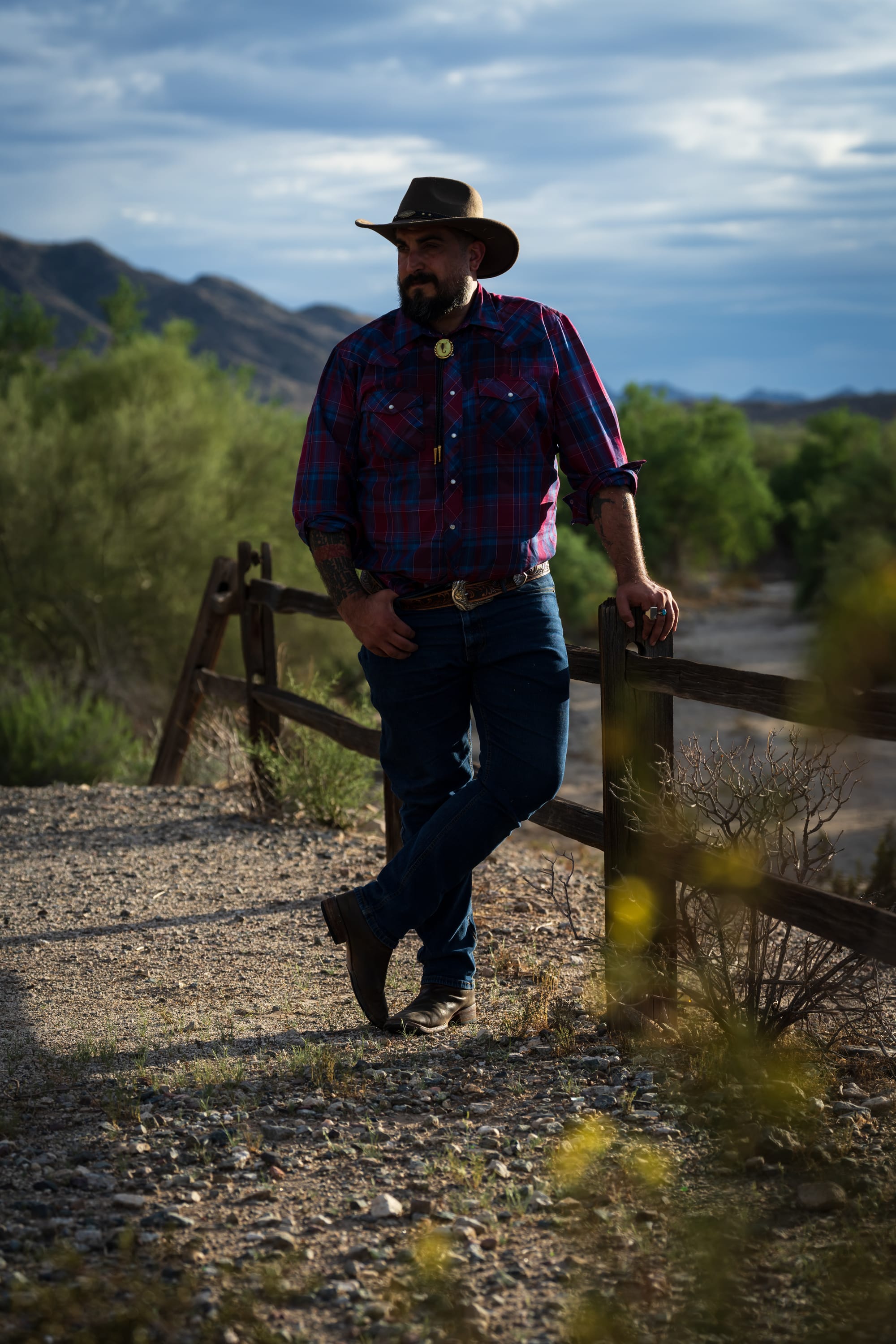
In order to better understand my own ideas of what makes someone a cowboy, I reached out to queer advocate (and my hometown hero) Elliott Hinkle. We discussed what we had noticed in local cowboy-centric spaces, from ranching and rodeo communities to stores selling exclusively Western wear. Elliott shared how they have seen a recent shift in local interpretation of Western wear becoming more closely aligned with political stance, noting how recent campaigns supporting resource extraction use cowboy imagery to relate to voters in the region.
With local primary elections in full swing, it wasn’t hard to find a campaign sign with a candidate in a cowboy hat promoting extraction, but this use of Western wear to gain voters’ trust is nothing new. American presidents have been using jeans to look more relatable to the public for decades, with Ronald Reagan and George W. Bush being the most well-known for their embrace of denim. The political implications associated with Western wear have been present for decades, but they did not used to be as important to local cowboy culture as the community connections associated with Western wear.
Similarly to Elliott, I grew up knowing ranchers who became my primary example of what it meant to be a cowboy; when I picture a cowboy, I remember the people who I have shared meals with and the people who I share my home with. Although my personal experience with cowboy culture in the past has predominantly shaped my definition of a cowboy, this interpretation shifts as I experience new things.
I transitioned from female to male in the same town that raised me with a sense of pride in the image of the cowboy, and over the course of that transition I found myself reconsidering what it really meant to be a cowboy. While I had always considered the term cowboy one that could be used regardless of gender, I became hyper-aware of the confusion people had when a mentioned cowboy was, in fact, not a boy. I decided that it would be better to not call attention to what my own gender may or may not be and chose to abandon the cowboy in favor of self-preservation.
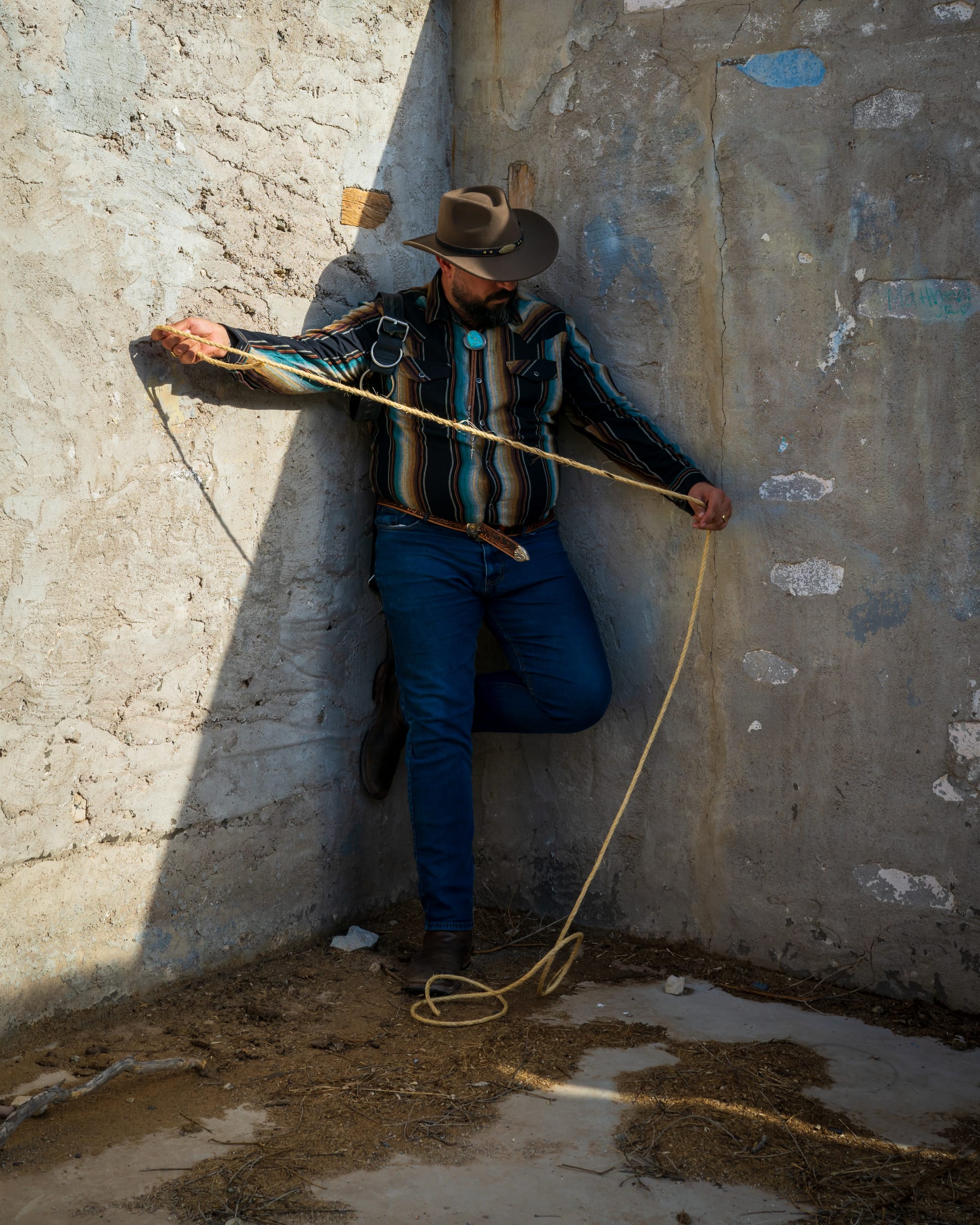
As I became more confident and comfortable with my gender identity, I longed to reconnect with the cowboy I had known. I had let other people influence what being a cowboy meant to me and had lost sight of what the cowboy really was: a reminder of home. A cowboy is not just a denim-clad mascot of the West, but a familiar face who I continue to share my life with.
The cowboy will always be up for interpretation, and although you may not find any meaning in a pair of jeans, you will certainly find other people who wear them just like you. And as you get to know them, those people will create your meaning of the cowboy.
At LOOKOUT, we believe in the power of community-supported journalism. You're at the heart of that community, and your support helps us deliver the news and information the LGBTQ+ community needs to thrive.

Protect Kids Colorado is pushing two ballot measures in the name of children. The young people they would govern say their voices have been left out.

A neighboring property owner to Barracks Bar Phoenix wants a judge to undo the state's approval of its liquor license, putting the future of a community leather space in continued limbo.

Two zine organizers in Colorado and Arizona talk on the politics of self-publishing across borders and how zines — especially in a world where zines are grounds for prosecution — are just as important today as they were decades ago.

The Tucson attack generated widespread coverage, but an analysis shows how quickly national attention faded as the community confronted its aftermath.
LOOKOUT Publications (EIN: 92-3129757) is a federally recognized nonprofit news outlet.
All mailed inquiries can be sent to 221 E. Indianola Ave, Phoenix, AZ 85012.