FROM THE MAGAZINE
Sandra Bernhard Found Her Voice in the Southwest
The trailblazing performer reflects on Arizona, queer identity, fearless humor and the landscapes that shaped her.


The trailblazing performer reflects on Arizona, queer identity, fearless humor and the landscapes that shaped her.

This article was originally published in LOOKOUT Magazine's Fall 2026 Issue. You can get the full issue as a downloadable PDF here.
Sandra Bernhard has never been shy about sharing her views. The multihyphenate, trailblazing entertainer, born in Flint, Michigan, and raised partly in the Valley, has spent five decades reshaping the boundaries of candor onstage and onscreen.
From her breakout role in Martin Scorsese’s “The King of Comedy” to her unforgettable run on “Roseanne,” Bernhard has built a career defined by fearless wit, emotional precision and a refusal to sand her edges.
In a conversation with LOOKOUT, Bernhard reflects on the Arizona landscapes that shaped her imagination, is frank about politics and identity, and is funny. Bernhard opens up about voice, belonging, conflict and the conversations she hopes we keep having.
Christina Fuoco for LOOKOUT: When you think back to Arizona, what parts of that landscape — literal or emotional — shaped the way you speak, perform or move through the world today?
Sandra Bernhard:Moving to Arizona in 1965 provided the experience of wide-open spaces, where you could drive through the desert for half an hour and take in the terrain, the cactus, the sagebrush, tumbleweeds blowing across the road. It was all there and real. That left openings in my imagination for future journeys. It was there that I really began to see what could take shape out in the world. That has served me well throughout my life and career.
CF: What were the conversations happening around your childhood home? What did you learn about voice, humor or conflict from the adults around you?
SB: My grandparents came from Russia, along with extended family, at the turn of the last century. So, they spoke Yiddish primarily, and it was those mellifluous tones that I often fell asleep to — very soothing and a feeling of safety. There was also drama, conversations about familia strife, friends and neighbors, successes and loss, the backdrop of a shifting American landscape with the JFK assassination, the Vietnam War, the racial struggles, along with the women’s movement and the youth revolution; these were all events that shaped me. Music, films, TV had a lot of impact and stayed with you.
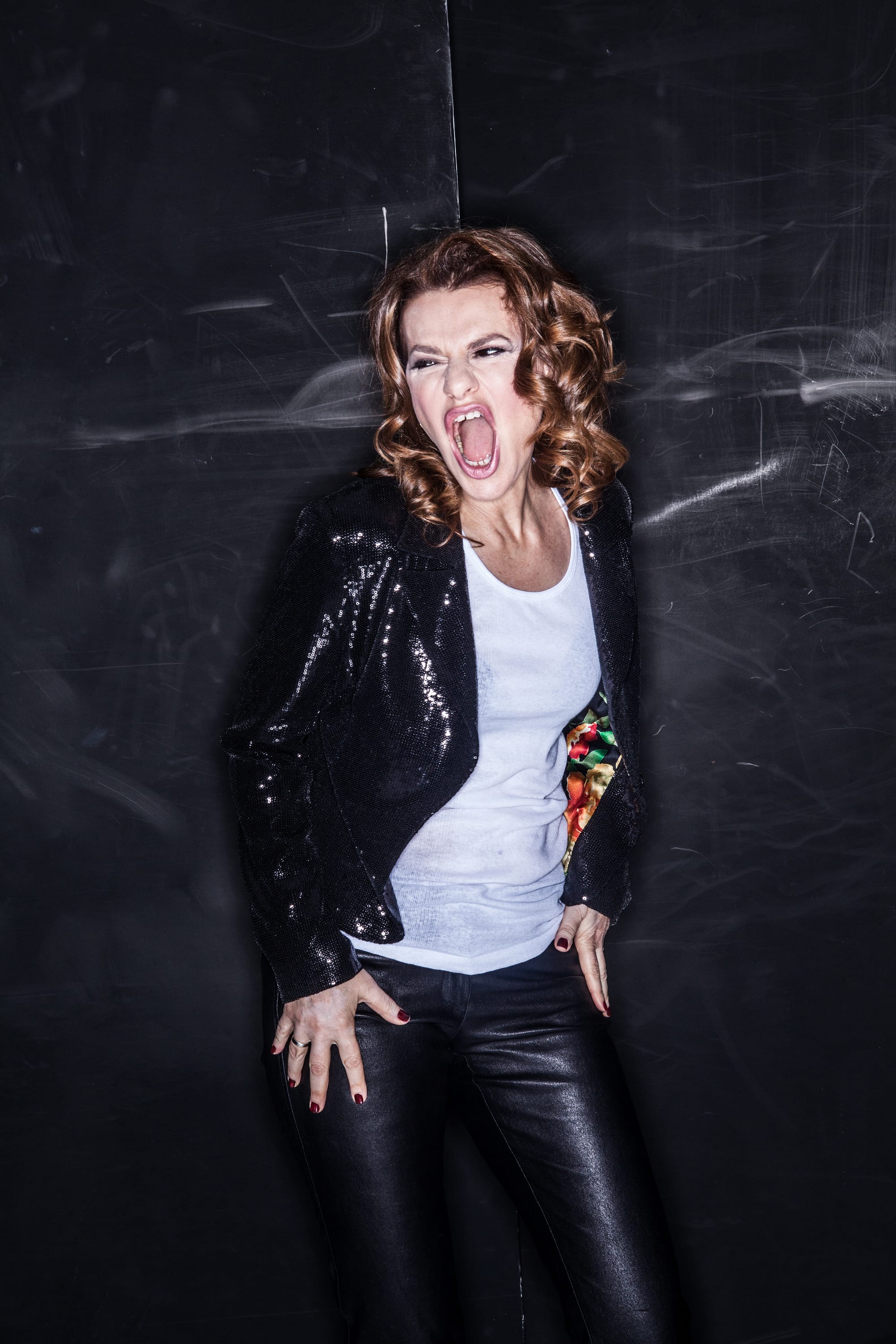
CF: Did you have early moments of queer recognition or community in Arizona, or did that come later? How did those early experiences shape your sense of belonging?
SB: WELL [sic] I was only 10, and it was 1965. I was riding horses and wearing my father’s ties so they could cut it off at Pinnacle Peak, the steakhouse way out in Cave Creek. You might say I was finding my way.
CF: You’ve built a career on sharp, fearless dialogue. What does a “good conversation” mean to you now?
SB: When people open up and get real and I walk away with a new perspective, nothing else matters anymore.
CF: When a conversation gets uncomfortable — politically, personally, culturally — what’s your instinct? Lean in? Redirect? Listen harder?
SB: If it’s some white man, I usually light into them. But I try and just sneak away these days.
I know not everyone has the time, money or energy to get up and travel. That’s what we have to remedy in our culture. That’s where socialism comes in. How do we make it fair for everyone?
— Sandra Bernhard, on what she hopes people try to achieve
CF: How do conversations — the messy, honest ones — help build stronger LGBTQ communities?
SB: That I can go in a million different directions, within the community or to the people who don’t understand the nuances we all have; things to fine-tune in our thinking.
CF: How do you use humor to open people up rather than shut them down?
SB: Humor is a natural icebreaker, and when it comes from someone who is known for frankness, I think people get a kick out of it. They might hear you in a way someone else wouldn’t be able to convey.
CF: What conversations around politics or identity have required the most courage from you?
SB: I think about Israel and the misconception that strongly disagreeing with the current stance on Palestine makes one antisemitic. It simply isn’t the case.
CF: How do you think conversations about queer visibility have changed since you first came onto the scene?
SB: Giant strides, small steps. The community has broken wide open. You can be so many different people under one banner. That’s cool.
CF: Do you feel a responsibility to spark certain conversations through your work, or does it happen naturally through the stories you tell?
SB: I never beat the audience up with the obvious. I like to layer things in and only get didactic. When someone is getting out of hand, then I can pull out the full Sandy smackdown.
CF: After someone meets you, hears you perform, or reads your work, what conversations do you hope they go home and have?
SB: A myriad. The most important one is that we have to let people be who they are and get comfortable with that, except MAGA people. They don’t have that luxury.
CF: What’s one idea you hope readers wrestle with — not just agree with — after reading this Q&A?
SB: How to be fearless and happy at the same time. We have to enjoy our lives, if we can — even if it’s something simple like a good walk or hanging out with friends or eating something delicious. I know not everyone has the time, money or energy to get up and travel. That’s what we have to remedy in our culture. That’s where socialism comes in. How do we make it fair for everyone?
CF:What does your voice feel like to you now — as a tool, a weapon, a comfort?
SB: I think all of these. That’s how I pivot back and forth in my work and my day-to-day life.
CF: What’s a conversation you’ve had recently that you can’t stop thinking about?
SB: I’ve had so many recently with fellow actors and creative people who I’m presently with, but those have to wait for a little while to discuss.
CF: Give me one Arizona memory — a street, a smell, a moment — that still lives in your body.
SB: So many, really. The day we arrived and checked into a motor court motel on Seventh Avenue in Phoenix, women were sunning by the pool with baby oil, iodine and aluminum reflectors. They were tanned and smoking in the heat of August. The reality that we had just left Flint, Michigan, behind and were about to start this unknown journey, I feel that I would not be who I am without my time in Arizona. That’s for sure.
At LOOKOUT, we believe in the power of community-supported journalism. You're at the heart of that community, and your support helps us deliver the news and information the LGBTQ+ community needs to thrive.

Growing up in the West taught me that being a cowboy has less to do with how you look and more to do with who you show up for.

A neighboring property owner to Barracks Bar Phoenix wants a judge to undo the state's approval of its liquor license, putting the future of a community leather space in continued limbo.

Two zine organizers in Colorado and Arizona talk on the politics of self-publishing across borders and how zines — especially in a world where zines are grounds for prosecution — are just as important today as they were decades ago.

The Tucson attack generated widespread coverage, but an analysis shows how quickly national attention faded as the community confronted its aftermath.
LOOKOUT Publications (EIN: 92-3129757) is a federally recognized nonprofit news outlet.
All mailed inquiries can be sent to 221 E. Indianola Ave, Phoenix, AZ 85012.