CULTURE
A Tucson Pride Festival Could Reemerge. But Does Anyone Want It?
After Tucson Pride collapsed amid debt and years of questions about accountability, queer groups are charting different paths forward.


East Sunnyside block watch president Jeff Tisot supports Phoenix’s parks ordinance, arguing that outreach should focus on getting people into housing and treatment—not keeping them in public spaces.
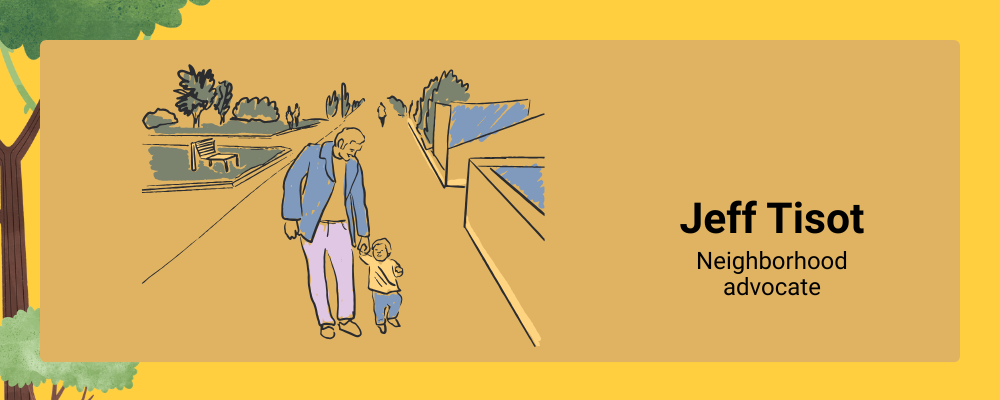
Phoenix’s neighborhood block watches are designed to give residents a connection to their community, a connection to local law enforcement, and a voice in how their neighborhood is kept safe. But block watch captains have grown beyond neighborhood cleanups and meetings — building relationships with elected officials, city departments, and law enforcement that can shape decisions about how public spaces are used.
Jeff Tisot, president of the East Sunnyslope Community block watch, says those relationships are built over time. Over the past decade, his organization says it has invested more than $3 million into neighborhood projects, grown to more than 500 active members, and worked directly with city officials on issues ranging from public safety to neighborhood improvements. (LOOKOUT hasn’t been able to independently verify those numbers.)
Block watches can receive up to $15,000 per year through Phoenix’s sales tax-funded Neighborhood Block Watch Grant Program. But for groups like Tisot’s, the influence comes from knowing who to call, how to navigate city systems, and how to organize residents around local issues.
“We work very closely with all of our elected officials, our police department, all our city and county departments,” Tisot said. “Even when we disagree with them we still work with them. We don’t fight them, but we don’t lose either.”
That approach has helped East Sunnyslope secure projects including participation in Phoenix’s Gated Alley Program and advocate for changes in neighborhood parks. It has also placed Tisot among the residents supporting Phoenix’s Parks and Recreation Ordinance, a policy that has sparked debate over how the city manages public spaces, homelessness, and the organizations that provide services in parks.
Tisot said his support for the ordinance comes from concerns about trash, discarded materials, and what he describes as unsafe conditions for families using parks. He said he believes people experiencing homelessness need more support and access to housing and treatment — but he argues that some current outreach efforts do not address the underlying issues.
At the same time, his comments highlight a larger moral quandary around the parks debate, which is who decides what parks are for — and if they’re meant to serve everyone equally.
LOOKOUT: How is it that you've built these relationships between your community and law enforcement, your community and elected officials?
JT: Persistence, time, and understanding. … You don’t build relationships overnight.
LOOKOUT: What is the main reason why you're supporting the ordinance?
JT: It's the trash and biohazards left behind. The fact that the parks are for everybody. We become a product of our environment. I feel for these people. Truly, honest, I do, but I don't want my kids around it.
LOOKOUT: Are there any instances you'd like to share about what you've seen at a park?
JT: There’s the drugs, the trash that's left behind. It's overwhelming. … I've been coaching little league football and baseball for 30 years. … The police are not the solution to everything in this world, but I have lost kids on my team because of the amount of homeless people that are there. It's not that they're there, it’s the 85 tons (and I’m exaggerating) of their personal property that they bring with them and leave behind. And the parents say, "Yeah, my kids not playing there. Sorry." That's wrong. I had parents tell me “My kids are not coming to this park.”
LOOKOUT: Which park?
JT: That was Palma Park. I haven't had that problem in quite a few years. We've got it cleaned up. I went to the meetings on this ordinance before it happened. One of my big takeaways was, every person for this ordinance, acknowledged the importance of what “the other side” is doing. People need medical help, but they can just walk into a hospital and get medical help. Not one single person from the provider community acknowledged us as a community: families or kids. Not one.
LOOKOUT: If you heard them make those acknowledgments, do you think there's a chance that would have had any impact on the final outcome?
JT: No, I still wouldn't have changed my thoughts on it, but it would have said, let's see if we can figure out a way around this, because when they’re providing all these services, people don't come to the park that are paying for the park, that live in the communities.
The drug abuse in the homeless community is insane. We should be focusing more on getting them the help they need, whether it's forced or voluntary. … If we could force them somehow to get help, where they might be able to see things differently, get past some of the evils in their life, and be more productive, and self-sustaining, because everybody needs self value and self-worth. I don't think they have any.
On the other side of the coin, if I want to get a baseball field, or a community event, I have to get a permit. And if I have a food truck there, I have to get city permits and county permits.
LOOKOUT: Do you think the way you apply for a permit should be the same way that these service providers apply for a permit?JT: Yeah, absolutely. Why not?
LOOKOUT: What’s one change you’d like to see?
JT: A reduction in the amount of unhoused people in the city. Helping somebody in a park doesn’t help them. It keeps them where they’re at. It sucks.
God bless these people that want to help them. Truly, I get it, but they're not helping them, they're enabling them, they're keeping them where they are at. Giving somebody a toothbrush and a peanut butter jelly sandwich does not help them out of their situation. And the trash these people leave behind is just all over the place. … We need a way to get help to these people, and I mean housing help, not peanut butter and jelly help.
LOOKOUT: What if those services are so limited, they just aren't able to get the benefit of those resources for days, weeks, months?
JT: That’s the number one issue, the availability of services.
LOOKOUT: Are you pointing to a solution that often just isn't there?
JT: No, I think it's there. Do I know that? No, I don't. This is just my opinion.
LOOKOUT: With 9,000-plus people homeless and the supply not popping up anytime soon, where are you wanting to see or not see homeless? Would you say you're not wanting them to be in the parks?
JT: I don't want to see them anywhere. I don't think in this country anybody should go homeless.
LOOKOUT: And since they are homeless, where are you comfortable seeing them?
JT: I feel for them. I’m not comfortable seeing them anyplace. I really am not.
LOOKOUT: Are you finding needles in the park before the game?
JT: It's been a while since we found needles because fentanyl took over the heroin trade. … Did I? Yes, but now I find the foil, where they're smoking the fentanyl. So I got to pick the foil up.

Southwest Recovery Alliance leader Arlene Mahoney says Phoenix's approach to homelessness and drug use puts lives at risk by limiting access to harm reduction services.
For people living on Phoenix’s streets, keeping insulin cold or protecting a prescription can be nearly impossible. One doctor is rethinking what healthcare looks like when survival comes first.
Robert McElhose has spent 15 years surviving on Phoenix’s streets. He shares what it takes to make it through another day, and what the city's new ordinance means for his ability get help.

The court's rollback of LGBTQ+ rights are proving successful for certain businesses that receive taxpayer funds.
LOOKOUT Publications (EIN: 92-3129757) is a federally recognized nonprofit news outlet.
All mailed inquiries can be sent to 221 E. Indianola Ave, Phoenix, AZ 85012.