CULTURE
A Tucson Pride Festival Could Reemerge. But Does Anyone Want It?
After Tucson Pride collapsed amid debt and years of questions about accountability, queer groups are charting different paths forward.


Robert McElhose has spent 15 years surviving on Phoenix’s streets. He shares what it takes to make it through another day, and what the city's new ordinance means for his ability get help.
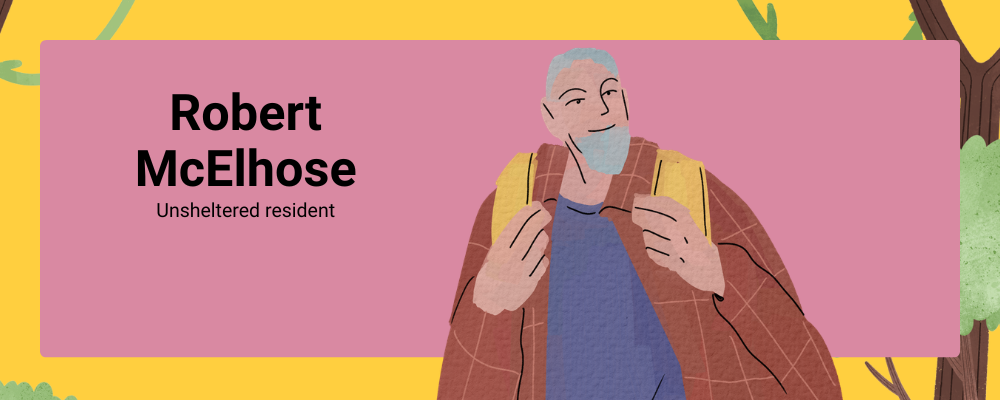
Robert McElhose has spent years learning the kinds of lessons most people hope they'll never need: where to sleep without drawing attention, how to avoid violence, how to find food, and how to survive a Phoenix summer.
He says homelessness is less about living without a house than making hundreds of decisions each day that keep you alive long enough to make another one.
LOOKOUT spoke with McElhose at an outreach event put on by local harm reduction group RIOT about what survival looks like when the street becomes home.
LOOKOUT: How long have you been living on the streets in Phoenix?
Robert McElhose: Since 2011. I've been single for six years.
LOOKOUT:: Has it been alone the entire time?
RM: It's hard to have a relationship in this kind of setting. It’s just a bad idea with fentanyl and everything else.
LOOKOUT:: What's the first thing someone has to learn to survive?
RM: You have to know your surroundings, and you've got to have a backup plan—even if you've got a shelter. A shelter isn't 100%. Depending on who you are, maybe you've got authority problems, or maybe people just don't like you.
LOOKOUT: How do you find a safe place to sleep?
RM: You want a populated area, but at the same time you don't want to be too visible—to the police or to people with influence. Stay on the outskirts of business districts or nicer residential areas. Don't trash the place. Don't draw attention to yourself.
In a low [income] community, somebody's always trying to bust a grape [hurt someone] on making money, dealing drugs, the violence goes hand in hand, especially with fentenyl. We fight for everything that we have, even sometimes our lives, our little lives. If someone says we stole something, but we didn't actually do it, we might die. Guys lose their lives all the time.
LOOKOUT: How do you avoid that?
RM: Gotta fight back. You have to fight back. You can't look weak, can’t be weak out here, you’ll just get eaten. They’ll take everything you have.
LOOKOUT: Do you ever try to hide the fact that you're homeless?
RM: You can’t. I just go through the embarrassment most of the time. You just gotta grin and bear it. You’re not going to be able to handle every situation and keep yourself clean. There’s just no way, depending on the weather and the mistreatment of people that have houses and apartments here. It’s cruel. I've even had a milkshake thrown on me.
LOOKOUT: How do you survive the summer?
RM: I stay wet. Move from water to water, shade to shade, with the liver cancer I have to.
LOOKOUT: How do you find food?
RM: I check dumpsters behind places where the kitchen staff bags food separately from the trash. If somebody tells you to leave, come back later. Keep the area clean. Take what you need.
LOOKOUT: What's your daily routine?
RM: You’ve got to keep your feet in tip top shape. Use foot powder if they're constantly getting sweaty, soaking wet. You want to keep your feet dry.
Don't let your shoes or socks slack if you can possibly help it.
LOOKOUT: What's making you be on your feet so much?
RM: I walk back and forth on my dumpster checks. I check out an old area I used to stay in or a new area where it might be more beneficial to myself or somebody else. The dumpster hustles are far. Some of them get set off [become unavailable] and then you have to go further and further to find another one. So you're going to be walking a lot.
LOOKOUT: What's one change you'd like to see?
RM: I wish people would get down to the real issue: Fentanyl. I know these guys use it and I don't knock them for using anything … You’ve got to have some kind of escape out here. Fentanyl is kind of like heroin, at first, and it's highly addictive.
LOOKOUT: What role do outreach events like this play?
RM: They're great. They keep down theft. They help keep down disease. They give people a chance to socialize.
When I was a homeless kid, it was more of a community. People took you in and showed you how to survive. You worked together to find food or help somebody who needed it. Now everything's separated. It's more "me" than "us."
LOOKOUT: Phoenix recently restricted events like this in city parks. What do you think?
RM: Well, that's the best place to do it at. There’s not much violence with us so I can’t see why. I can see why they don't want kids to see paraphernalia, or to find out what’s going on with this or that. But kids ought to know where they're headed, especially nowadays.
But they used to be a good place to sleep. It's a place where you’re safe.
LOOKOUT: Is there anything you wish people understood?
RM: You think your life is going to be perfect, because you never know when you're going to end up out here. I see people end up here all the time that just wonder, “What happened?”
LOOKOUT: What gives you hope?
RM: If people would just give things a chance, and go after the real issue, fentanyl. Homelessness has been around since the dawn of man, and you aren’t going to change it. The biggest man always had the cave and the girl, everybody else slept outside, anyway.

Southwest Recovery Alliance leader Arlene Mahoney says Phoenix's approach to homelessness and drug use puts lives at risk by limiting access to harm reduction services.
For people living on Phoenix’s streets, keeping insulin cold or protecting a prescription can be nearly impossible. One doctor is rethinking what healthcare looks like when survival comes first.
East Sunnyside block watch president Jeff Tisot supports Phoenix’s parks ordinance, arguing that outreach should focus on getting people into housing and treatment—not keeping them in public spaces.

The court's rollback of LGBTQ+ rights are proving successful for certain businesses that receive taxpayer funds.
LOOKOUT Publications (EIN: 92-3129757) is a federally recognized nonprofit news outlet.
All mailed inquiries can be sent to 221 E. Indianola Ave, Phoenix, AZ 85012.