Voters who gave Democrats control of Arizona’s Legislature for the first time in 60 years told LOOKOUT they want real change. Democratic leaders are promising to be “thoughtful and intentional.”
After a report from LOOKOUT and The Intercept, the town wants a written explanation for why an audit certified in 2023 listed no allegations of sexual misconduct, even though state corrections records list three.
Aron Lucio Castillo says that the healthcare system in America is not built for people like him.
As an undocumented, transgender migrant from the Rarámuri community of the mountains of Chihuahua, Mexico, accessing care meant navigating a system that often was not built for people like him.
“The clinic belongs to those who work it." —Aron Castillo
That experience eventually led Castillo to become the first patient of Clínica Liberación, a clinic created by Trans Queer Pueblo specifically for LGBTQ+ undocumented migrants — and later to help build the clinic himself.
“I migrated to the U.S. at 9 years old and quickly understood what it meant to be undocumented in Arizona” recalls Castillo.
“I still remember in high school when my counselor asked for my social security number to see what financial options I had for college, Castillo said. “It was then that I learned I didn’t qualify for any government assistance and would have to pay double the tuition compared to my documented peers because my undocumented status disqualified me from in-state rates.”
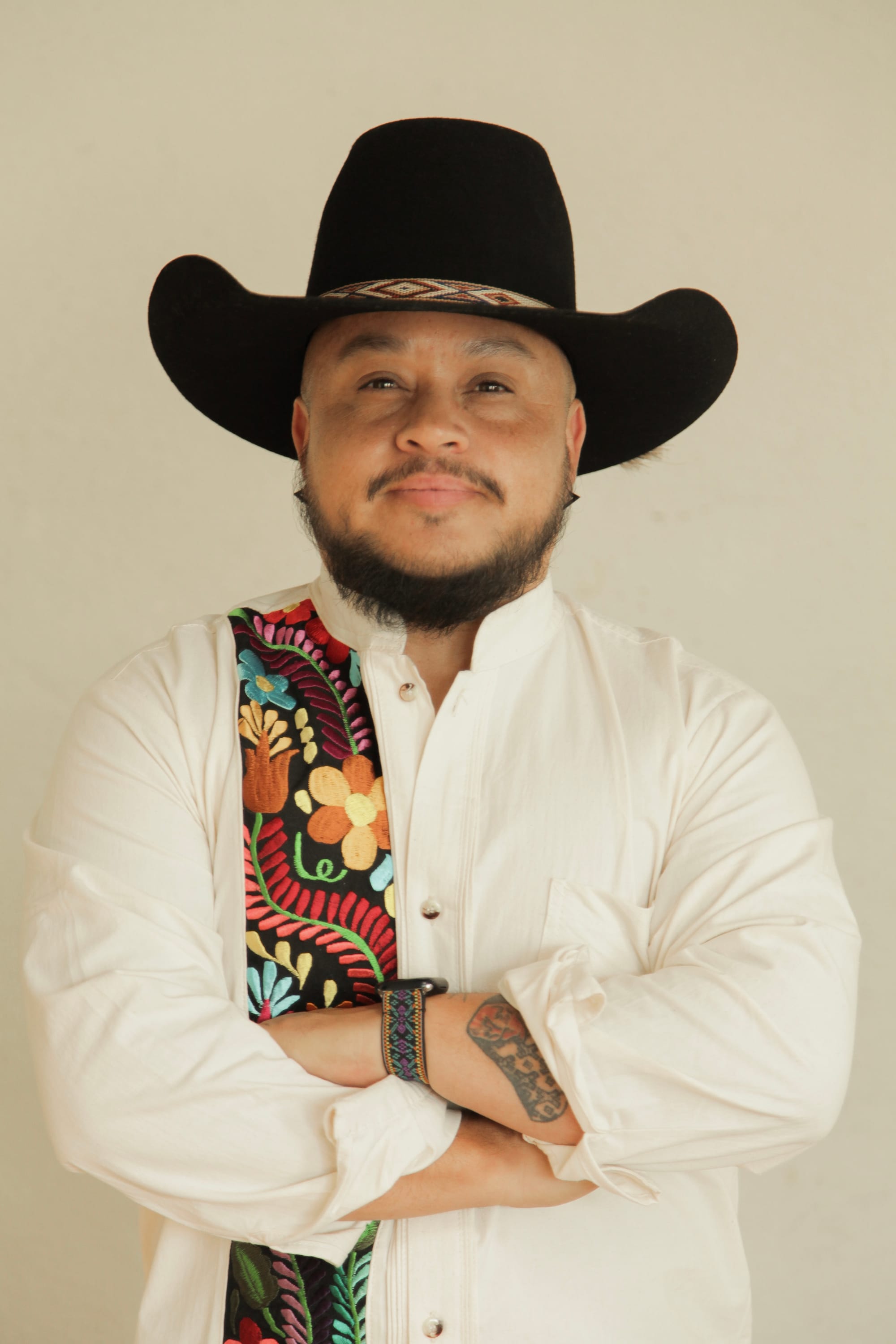
Aron Castillo, courtesy of Trans Queer Pueblo
One of the clearest examples of how state policies can create barriers for LGBTQ+ undocumented people is Arizona’s 2004 Proposition 200. The law requires state and local agencies to verify the immigration status of applicants for public benefits, including health care.
For undocumented people, Proposition 200 has made accessing health care significantly more difficult, since state law requires identification to show legal status. For transgender men like Castillo, that’s created additional barriers to gender-affirming treatments. Trans Queer Pueblo’s clinic saw 213 patients who, like Castillo, needed access to care that has become difficult — or in many cases impossible — to access.
The law also allows what advocates describe as medical deportation, in which an undocumented patient seeking care at a hospital can later be deported.
“Even if we had access to public healthcare, the system wasn’t designed for people like us,” Castillo said. “Historically the US healthcare education has been based on the bodies and experiences of white men as the default model.”
Undocumented migrants can face numerous barriers to health care, including language barriers, a lack of cultural competence, systemic transphobia and racism within the health care system.
“We knew that the US government was never gonna save us,” Castillo said. “Our solution was to come together and build radical well being with cycles of mutual support. It led Clínica Liberación, the first patient-run clinic for LGBTQ+ undocumented migrants in the U.S.”
Castillo was part of a small group of young undocumented migrants who built Clínica Liberación from the ground up.
The clinic is based on a model of autonomy. Patients participate in creating and sustaining the clinic, and when someone is brought in for care, they can later return to volunteer, working alongside other community members and health care providers.
That model allows patients and community members to establish their own standards and agreements rather than relying entirely on a state health care system that has historically marginalized them.
Castillo ahs experienced this first-hand: He entered Clínica Liberación as its first patient. He helped build the institution around him. Today, he helps others navigate it.
“The clinic belongs to those who work it,” he said.
Before you go...
At LOOKOUT, we believe in the power of
community-supported journalism. You're at the heart of that community, and your support helps us deliver the
news and information the LGBTQ+ community needs to thrive.
Two zine organizers in Colorado and Arizona talk on the politics of self-publishing across borders and how zines — especially in a world where zines are grounds for prosecution — are just as important today as they were decades ago.
LOOKOUT Publications (EIN: 92-3129757) is a federally recognized nonprofit news outlet.
All mailed inquiries can be sent to 221 E. Indianola Ave, Phoenix, AZ 85012.